- Google Ads
How Google Ads Help Yoga Studios Get New Members Fast

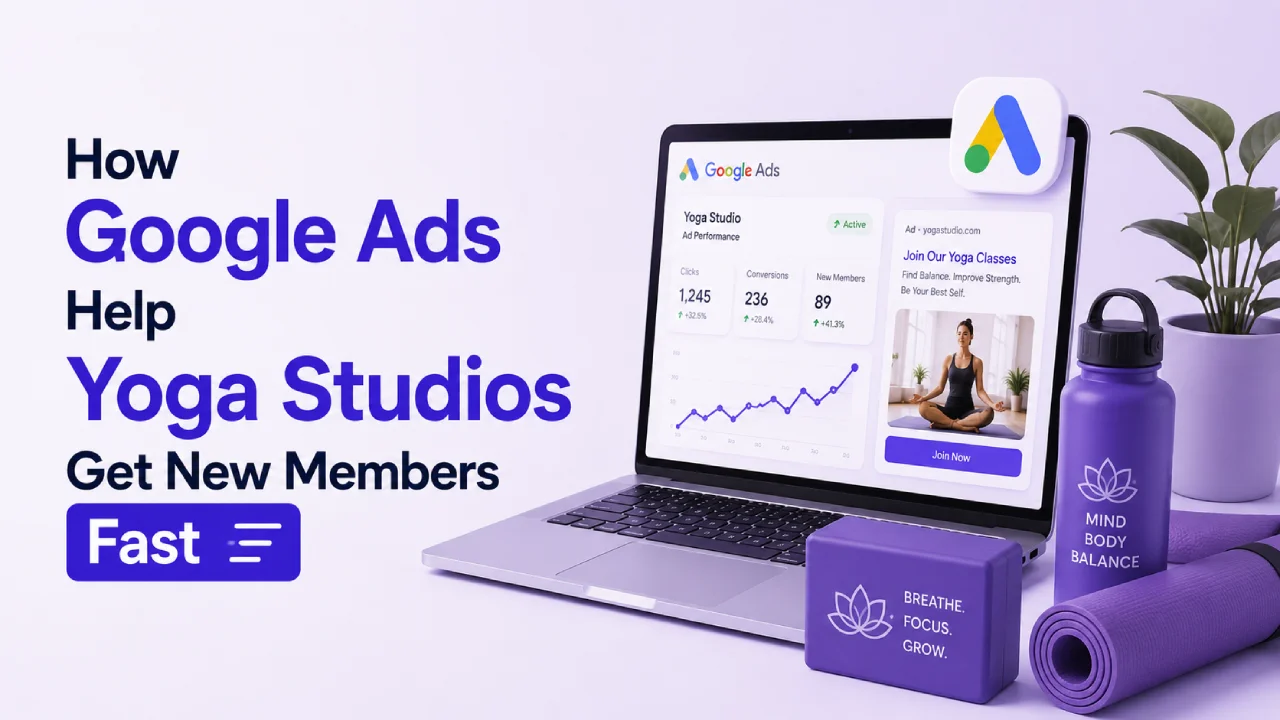
A half-empty class is one of the most frustrating things in the yoga business. The teacher still has to teach. The lights are still on, the heating is still running, the rent is the same whether eight mats are down or eighteen. Every quiet session is money you will never get back, and if you have ever stood at the front of a near-empty room knowing the work and the cost were the same, you already understand the problem this post is about.
SEO will fill those classes eventually. Social media might, with enough time and a lot of patience. But “eventually” does not pay this month’s rent. When you have capacity sitting empty right now, you need members soon, not next quarter. That is the exact problem Google Ads is built to solve.
This is a guide to using paid search to fill yoga classes quickly, written for studio owners who have spaces to fill and would rather not wait six months to fill them. We will get into search campaigns, the keywords that actually bring members through the door, the landing pages that turn a click into a booking, and how to tell whether the whole thing is making you money.
Why Google Ads Beats Everything Else on Speed
Let us be honest about what marketing channels actually do. Most of them are slow. SEO is a beautiful long-term asset that quietly compounds, and we recommend it to almost every studio we work with. But it is a marathon. If your September timetable has gaps in it, an SEO strategy you start in June is not going to rescue you in time.
Search Ads Catch People at the Moment of Intent
Here is what makes paid search different. When someone in your area opens Google and types “yoga classes near me”, that is not idle curiosity. The decision is basically made. They want to try yoga, they just need somewhere to do it, and they are ready to book today rather than someday. A search ad drops your studio right in front of that person while they are still looking, ahead of every competitor they have not found yet. Nobody had to talk them into wanting a class. The demand was already there, and you simply caught it at the right second. That is why it moves so fast.
From Switched On to Booked In Within Days
The speed genuinely surprises people. You can have a campaign live by Friday and a trial booking sitting in the diary by Sunday. None of the usual SEO waiting applies here. Google does not need to crawl anything, there is no ranking ladder to climb over weeks, and you are not trying to charm an algorithm into liking you. You pick a budget, the ad starts showing for the searches you care about, and the clicks begin. For a studio looking at a dead Tuesday evening class, that kind of immediacy is the entire appeal.
Search Campaigns Are the Engine Here
Google offers a confusing buffet of campaign types, and a lot of studio budget gets wasted on the wrong ones. Display ads scatter banners across random websites. Performance Max throws your money into a black box and asks you to trust it. For a yoga studio that needs members quickly, neither of those is where to start.
Why Search Beats Display and Social for Fast Bookings
Search campaigns work because they chase intent, not just vague interest. Think about the difference. A display banner might land in front of someone who skimmed a wellness article eighteen months ago, and that person is nowhere near booking a class tonight. Search gets you the person who is, at this exact moment, typing their need into Google. When the goal is filling a class this week, I have yet to find anything that beats it, and it is where a brand new studio campaign should be putting its money before anything else.
Keep It Simple When You Start
There is always a temptation to launch with twelve campaigns and a spreadsheet of two hundred keywords. Resist it. A small, sharply built search campaign pointed at a handful of high-intent local searches will quietly beat a big messy account every single time, and it has the bonus of being much easier to read when you are working out what is actually happening. Begin with something modest. Watch which searches turn into bookings. Then grow the account out from whatever is already pulling its weight.
The Keywords That Actually Fill Classes
Keywords are where campaigns quietly succeed or fall apart. Get them wrong and your budget evaporates on clicks from people who were never going to set foot in your studio anyway. Get them right and the same money suddenly stretches a lot further. What catches people out with yoga is that the keywords worth having are hardly ever the obvious ones.
Class-Specific Keywords Bring Class-Ready People
The single word “yoga” is a money pit, plain and simple. The person typing it might want a YouTube video to follow at home. They might be shopping for leggings, or reading up on where the practice came from, or looking for a studio four hundred miles away. You have no idea, and Google charges you to find out. Specificity fixes this. When someone searches “hot yoga Belfast” or “beginners yoga class near me”, they have handed you both what they want and roughly where they are standing. Line your keywords up with the classes you genuinely run and the people clicking through become people you can actually book in.
Think About Who Is Searching and Why
Different classes pull in completely different searchers, and your keyword list ought to reflect that rather than flatten it. Take “prenatal yoga”. That is someone in a particular life stage with a real, time-sensitive need, and they tend to be highly motivated to get booked in quickly. The “morning yoga class” searcher is after something else entirely, building a habit into their week. And “yoga for back pain” is an interesting one, because that person is part patient and part student, often nervous, and frequently the most loyal member you will ever sign up. Every one of those is worth going after on purpose instead of bundling the lot under a single generic term and hoping.
Local Intent Is Non-Negotiable
Yoga is about as local as a business gets. Nobody is crossing the city for a Vinyasa class, however brilliant the teacher. So your keywords need geography baked in somewhere. That might be the town name, or the specific neighbourhood you sit in, or just the dependable “near me” that phones quietly attach to local searches without anyone typing it. Skip that local layer and you end up paying for clicks from people who live far too far away to ever turn into members, which is about the purest form of wasted budget there is.
The Landing Page Decides Whether the Click Becomes a Member
Here is the mistake that quietly wastes more yoga ad budget than any other. The ad is perfect, the keywords are sharp, the click costs are reasonable, and then every visitor lands on the studio homepage and promptly leaves. The ad did its job. The page let it down.
Why the Homepage Is the Wrong Place to Send Ad Traffic
Your homepage is trying to do about ten jobs at once, which is exactly why it does none of them especially well. Picture the person who just clicked an ad for “beginners yoga”. They have no interest in your founder’s origin story. They are not here to scroll the whole timetable or go digging for a phone number buried in the footer. They want one thing, which is an easy way to book or try a beginners class, and they want it without effort. Send that click to a page built for that single purpose and you can watch your conversion rate double or even triple on identical ad spend.
What a Converting Yoga Landing Page Looks Like
A good landing page is almost rude in how focused it is. It leads with the exact class the person searched for, so there is no doubt they are in the right place. The next few available times sit right there. There is a quick, honest note on what to expect if they have never set foot on a mat, and booking takes roughly three taps from start to finish. A genuine photo of the actual room earns its place too, because a nervous first-timer quietly wants reassurance the class will not be full of impossibly bendy regulars. Clear out everything that is not actively helping them book, then watch what the numbers do.
Measuring ROAS Properly (Or You Will Quit Too Early)
This is the part that decides whether you stick with Google Ads or give up on it unfairly. Plenty of studios switch their campaigns off in month one because the maths looks bad, when the maths was simply being done wrong.
A New Member Is Worth Far More Than One Class
Say it costs you thirty pounds in ad spend to sign a new member, and their first class was a ten-pound drop-in. On paper, you just lost twenty quid. Disaster. Except that member then buys a class pass, comes back weekly for eight months, and brings a friend. Suddenly that thirty-pound acquisition cost looks like one of the best investments you made all year. Judging a yoga campaign on the first transaction alone will always make it look like a failure, when the real value is in the months that follow.
Track the Booking, Not Just the Click
Without measurement you are flying blind, which is why conversion tracking really is non-negotiable. The thing you need visibility on is which keywords actually produce bookings, because that is a very different list from the keywords that merely produce clicks. A term can rack up cheap clicks all day and never fill a single class, and all the while it is quietly draining the budget. Get proper tracking in place from the first day the campaign runs. Give it a couple of weeks and the data starts telling you plainly which keywords deserve more money and which ones to switch off.
How Creative Sweet Fills Classes for Yoga Studios
We build and run Google Ads campaigns for yoga studios and fitness businesses across Belfast and Northern Ireland, and the studios that find their way to us tend to arrive with the same story. They boosted a handful of posts, maybe had a go at running ads themselves, watched not much come back from it, and quietly decided that paid advertising just does not work for yoga. Nine times out of ten the channel was never the issue. It was how the whole thing had been set up.
What we do is build the campaign properly from the ground up. That means the high-intent local keywords that bring class-ready people, landing pages designed to turn those clicks into bookings, and conversion tracking that shows the real return rather than a vanity click count. We measure against the value of a member, not a single drop-in, because that is the number that actually tells you whether the campaign is working.
If you have got empty space in your timetable and you want it filled in weeks rather than seasons, paid search is almost certainly the fastest way to get there. Get in touch at creativesweet.net or book a free discovery call, and we will look at your studio, your classes, and your local market and tell you honestly what Google Ads could do for you.
Frequently Asked Questions About Google Ads for Yoga Studios
How quickly can Google Ads fill a yoga studio class?
Faster than just about any other channel out there. Once a Google Ads campaign is live, class enquiries and trial bookings can start landing within days, where the same outcome through SEO or organic social would have taken months of patience. Most yoga studios start seeing genuine new-member activity inside the opening two or three weeks, and the campaign tends to get sharper still as it gathers conversion data over that first month.
Why are search campaigns best for yoga studios?
Because search campaigns put your studio in front of people who are already looking for a yoga class nearby, right at the moment they are weighing up where to try one. Awareness advertising is a slower game by design. It has to build interest from a cold start, often over weeks. Search ads do something different by catching demand that is already sitting there waiting, and when you have empty class capacity to fill, that is the quickest route to actual new members.
What keywords should a yoga studio target with Google Ads?
The strongest results come from specific, high-intent keywords paired with your local area name. Things like “yoga classes near me” work well, and so do class-specific searches around beginners yoga, hot yoga, or prenatal yoga. Terms with class type plus a location pull in people who are basically ready to book. The opposite happens with broad searches. Bidding on “yoga” by itself tends to burn budget on people who are either too far away to attend or not yet committed enough to book anything at all.
What is a realistic ROAS for yoga studio Google Ads?
Measure return against the lifetime value of a member, and well-run yoga campaigns typically come back at four to eight times what you spent on the ads. A new member who carries on attending across several months, or who buys a class pass off the back of their first visit, is worth a great deal more than one drop-in fee on a Tuesday. So judging the campaign against that fuller member lifetime value, rather than just the first booking, is the only way to see whether the ads are genuinely making money.
Can Creative Sweet manage Google Ads for my yoga studio?
Yes. Creative Sweet builds and runs Google Ads campaigns for yoga studios and fitness businesses across Belfast and Northern Ireland, covering keyword strategy, landing pages, and conversion tracking. Get in touch at creativesweet.net to talk through how quickly paid search could fill your empty classes.


Keep reading
- SEO
Most MSK physiotherapy clinics are far better at treating patients than they are at being...

- Branding
Here is a pattern we see a lot. A salon opens, the diary is quieter...
- SEO
Plenty of Belfast business owners have a website and assume that covers the online side...