- WordPress
Cookie Consent Management for UK Websites: Everything You Need to Know in 2026

This post is general educational guidance for SME website owners and does not constitute legal advice. For anything material to your specific business, speak to a qualified legal professional.
Cookie compliance has quietly become one of the biggest sources of low-level panic for UK small business owners over the past couple of years. Every year the rules seem to get tighter than the year before, and the ICO keeps quietly ramping up the enforcement noise around the whole area. Meanwhile the actual guidance floating around online is honestly contradictory in a lot of places. Some of it is out of date, and much of what remains is genuinely written for enterprise legal teams instead of the sole trader running a plumbing business somewhere in Belfast. The gap between what you legally need to be doing on your site, versus what actually feels reasonable to a small business, is where most SMEs end up quietly stuck.
What follows walks through what UK cookie consent actually requires as of 2026, written for SME business owners in plain terms rather than the way enterprise compliance teams talk about this stuff. It covers what actually counts as a cookie under the rules, along with what valid consent looks like in practice and where the ICO has been focusing its enforcement lately. It also, importantly, covers what a properly compliant setup actually looks like on a normal small business website. You can either match it yourself from here, or hand this post over to whoever handles your site to do the same.
The Two Laws That Actually Govern UK Cookies
Cookie compliance in the UK actually sits at the intersection of two entirely separate pieces of legislation. Confusing the two is honestly where a good chunk of the internet advice on this ends up going sideways. Understanding what each of them covers genuinely matters, since they carry meaningfully different penalties, along with slightly different requirements once you get into the detail.
UK GDPR Handles Personal Data
UK GDPR governs how personal data is processed on your website, and that includes any data collected by cookies and passed onward from there. Where a cookie identifies a specific user, or tracks that user\’s behaviour across pages of your site, or feeds their data to an advertising network somewhere, UK GDPR is going to apply. The consent standards under this legislation are strict. Consent must be freely given, specific, informed, and unambiguous. That specific four-part combination is what the phrase “valid consent” genuinely means in practice, and it rules out a lot of what older cookie banners used to be able to do quietly.
PECR Handles the Cookies Themselves
PECR, which is short for the Privacy and Electronic Communications Regulations, is the specific piece of legislation governing cookies alongside similar tracking technologies. This is genuinely the law that requires you to obtain consent before dropping any non-essential cookies onto a visitor\’s device. PECR is enforced by the ICO, and it applies to essentially every UK website out there. The size of the business does not exempt anyone, and neither does the industry it operates in, or where the visitors happen to be arriving from.
Which Cookies Actually Need Consent
Not every cookie on your site triggers the consent requirement, and understanding the different categories genuinely matters here. Those categories determine what the banner on your site actually needs to be doing. Getting this piece wrong in either direction happens to be one of the more common mistakes we see across UK SME websites.
Strictly Necessary Cookies Do Not Need Consent
The exemption covering strictly necessary cookies is honestly narrower than most business owners initially assume. It covers cookies that are genuinely essential for the website to actually work as the user requested it. Session cookies running during a checkout flow qualify for this exemption. So do login cookies keeping a user signed in through their session, alongside security tokens preventing cross-site attacks in the background. Anything sitting beyond that specific “the site cannot function without it” threshold falls outside the exemption entirely. That means analytics cookies need proper consent, along with any marketing cookies or personalisation cookies you might have running.
Analytics Cookies Absolutely Need Consent
This is honestly where quite a few UK small business websites are quietly non-compliant right now. Google Analytics cookies definitely require valid consent under UK GDPR alongside PECR. The same standard applies to Meta Pixel, and it applies to any similar measurement tool sitting on the site. The ICO has been genuinely explicit about this point in its recent guidance updates. The argument that analytics are somehow benign, or that they are necessary for running the business, honestly does not hold legally either. If a visitor lands on your site and Google Analytics fires before they have interacted with your cookie banner, that setup is non-compliant.
Marketing and Advertising Cookies Are the Highest Risk
Anything actively feeding data to advertising platforms sits right at the top of the ICO enforcement priority list. Retargeting pixels sit inside that category, alongside conversion tracking and third-party ad networks running on the site, along with personalisation cookies quietly shaping what a user sees. All of these need explicit opt-in consent under the current rules, and this is genuinely where recent regulatory attention has been concentrated.
The Third-Party Cookie Problem Nobody Warns You About
A quiet trap sits inside embedded content. Take a YouTube video embedded on your site as one example. Google Maps embeds behave similarly, and so do social media widgets like Instagram feeds or Twitter timelines. All of those third parties drop their own cookies onto the visitor\’s device the moment the page finishes loading. Your consent banner needs to properly cover these embedded services too, which in practice usually means the embeds cannot load at all until consent is actually given. Ignoring this is honestly the single most common technical compliance failure we see on UK small business websites.
What Valid Consent Actually Looks Like in Practice
The consent standard can feel a bit abstract until you actually see it applied to a real cookie banner sitting on a website. In practice it genuinely comes down to a handful of specific design decisions. Those decisions are what end up separating a compliant setup from a setup that would fail an ICO audit if one landed tomorrow.
Pre-Ticked Boxes Are Not Consent
This particular rule catches out a huge number of older banners still sitting on UK websites today. Any cookie category set to Accept by default fails the “unambiguous” test of valid consent under current standards. The user genuinely has to actively opt in for each category of non-essential cookies on the site. Pre-ticked boxes fail this test. So do sliders defaulted to the on position, alongside any banner wording that quietly assumes consent unless the user takes action to object. Every one of those setups fails the standard.
Reject Must Be as Easy as Accept
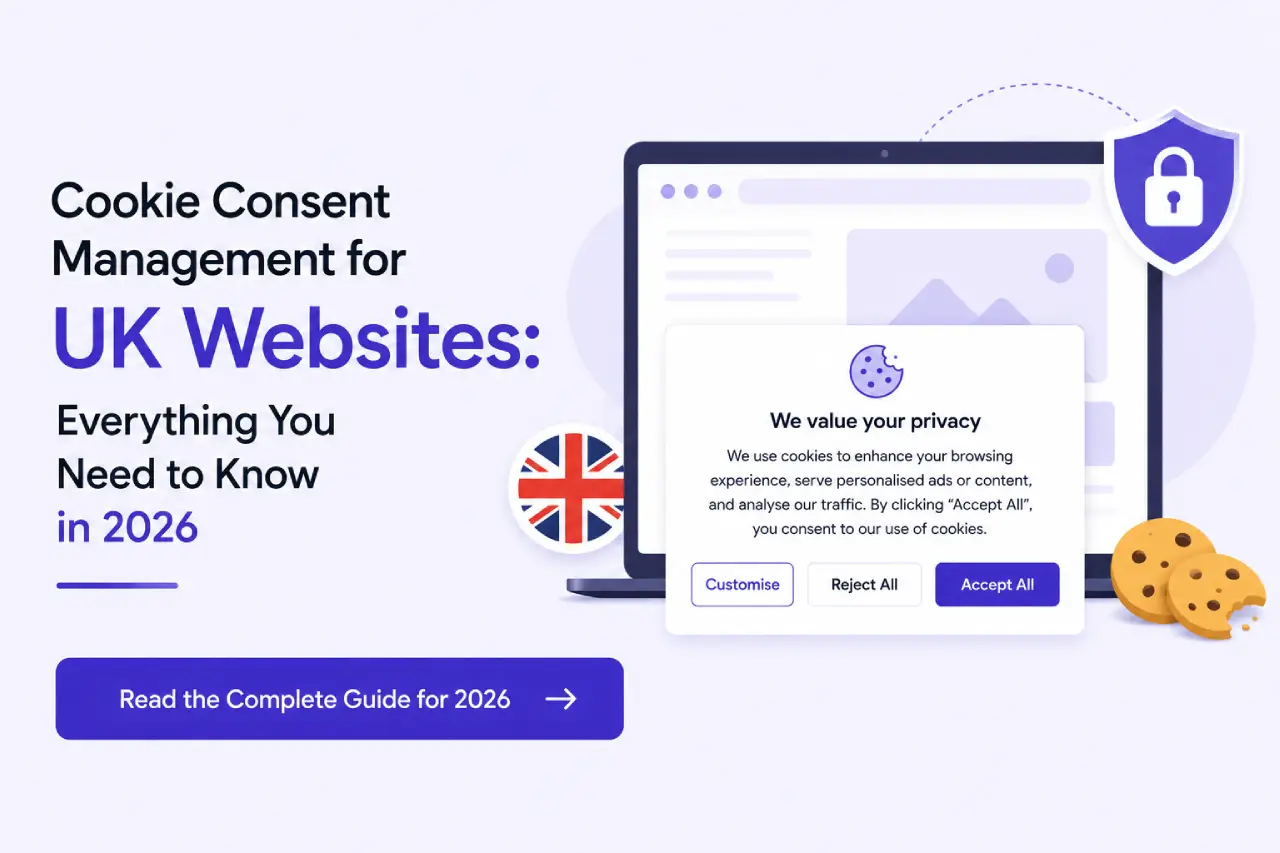
The ICO has been particularly clear on this specific point across recent enforcement action. Any site offering Accept All as a single-click option must also make Reject All available as a single-click option on the same screen. The older dark-pattern approach, where Reject was hidden two menus deep while Accept sat prominently in the banner, is now explicitly non-compliant under the current standard. That specific pattern is genuinely what enforcement action has been targeting lately.
Users Must Be Able to Change Their Mind
Consent has to be genuinely as easy to withdraw as it was to give in the first place. What that means in practice is that the site needs to offer a persistent way to reopen the cookie preferences at any point. Usually this shows up as a small icon sitting in the footer, or as a link inside the privacy policy. A visitor who chose to accept last week needs to be able to change that decision this week, and they should not have to go hunting through the site to do it.
How to Actually Implement This on a UK Small Business Site
The good news is that proper implementation is not particularly technical anymore. Several off-the-shelf tools handle the compliance side well for SME budgets, provided you configure them properly.
Consent Management Platforms Worth Considering
CookieYes is a popular option for WordPress sites and starts at a genuinely affordable monthly cost. Cookiebot from Usercentrics is another widely used platform with strong compliance credentials. Complianz sits in the WordPress ecosystem specifically and does a solid job for smaller sites. Any of these handle the banner, the consent recording, and the automatic blocking of non-essential cookies before consent has been given. Free tiers exist but often lack the specific features the ICO wants to see, so paid tiers starting around ten to twenty pounds monthly are usually the sensible choice.
The Setup Steps That Actually Matter
Getting the tool itself installed is honestly only half the work involved. Configuring the banner to properly match your actual cookies is the next piece, which means running a cookie audit first to see what your site is currently dropping. Google Tag Manager needs setting up in consent mode as well, so that tags only end up firing once the appropriate consent has actually been granted. Beyond that, your privacy policy wants updating to list the cookies you use and the reasons you use them. Skipping any of these steps genuinely leaves you technically non-compliant, even with a fancy-looking banner sitting on the site.
Why the Cookie Audit Matters More Than the Banner
Most SME site owners assume installing a banner is the whole job. The banner is genuinely the smaller half. Knowing what cookies your site actually sets, and being able to describe them accurately in your privacy policy, is what makes the whole thing legally sound. Free scanners like the one built into Cookiebot can inventory this in a few minutes.
What ICO Enforcement Actually Looks Like in 2026
The Information Commissioner’s Office has been shifting from advisory posture to active enforcement across the past couple of years, and understanding how that plays out in practice takes the abstract fear out of the topic.
Most enforcement starts with a written notice giving you a specific window to fix the issue, typically thirty days or so. Serious cases genuinely can escalate to actual fines, though the ICO has historically kept the largest financial penalties for major breaches affecting significant numbers of users. For a typical UK SME, the more practical risk is honestly less about a headline-grabbing fine landing. It sits more in the reputational damage of being publicly named inside an enforcement notice, along with the cost of a rushed compliance overhaul done under time pressure. Getting the setup right proactively works out genuinely cheaper than fixing it reactively once the ICO has already been in touch.
The Specific Mistakes Small Businesses Keep Making
Some patterns show up consistently on SME websites that are quietly non-compliant. Being aware of these means being able to check your own site against them.
The single most common issue we see across UK SME sites is analytics firing before consent has actually been granted. Sitting close behind that are cookie banners handling only first-party cookies while quietly ignoring the embedded YouTube videos and social widgets already on the page. Privacy policies mentioning cookies vaguely, without listing them out specifically, fail the “informed” test of valid consent. Consent that cannot be easily withdrawn afterwards also fails the standard, and banners using dark patterns to nudge users toward Accept, whether that means burying Reject somewhere hard to find or styling it to look less prominent visually, fall foul of the recent ICO guidance too. That last one applies regardless of whatever technical claims the banner vendor might make about being compliant.
How Creative Sweet Handles Cookie Compliance for Clients
We handle cookie consent implementation as part of ongoing website care packages for businesses across Belfast and Northern Ireland. The work covers the technical setup, the banner configuration, the cookie audit, and the privacy policy updates that keep everything consistent. For most SME clients this ends up substantially cheaper than paying a specialist compliance consultant, and the outcome is the same when the setup is done properly.
Our approach also builds in ongoing review, because cookie compliance is honestly not a one-off setup task you can walk away from. New plugins get added to the site over time. Third-party services quietly change what cookies they drop without warning, and the ICO regularly updates its guidance too. Running a quarterly compliance check keeps everything properly in line, without letting the setup quietly drift out of date. That drift is genuinely what causes most SME non-compliance we see in practice.
If your business website is currently running without a properly compliant cookie setup in place, or you are honestly just not sure whether the banner you inherited from a previous developer is actually doing what it should, that is a genuinely worthwhile conversation to have. Get in touch at creativesweet.net or book yourself in for a free discovery call. We can take an honest look at your current compliance posture and give you a clear picture of what would need doing to bring things properly into line.
Frequently Asked Questions About UK Cookie Consent
Do UK websites legally need a cookie banner?
Yes, if the website uses any cookies beyond the strictly necessary category. Under UK GDPR sitting alongside PECR, any website has to obtain valid consent from its visitors before dropping non-essential cookies onto their devices. Both analytics cookies and marketing cookies need consent under the current standard. The ICO has been actively enforcing this rule against non-compliant sites across the past couple of years.
What cookies do not need consent under UK law?
Only strictly necessary cookies actually fall outside the consent requirement. This category is deliberately narrow in how it is defined. It covers cookies genuinely essential for the website to work as the user requested it. Session cookies used during a checkout process fit that description. So do login cookies that keep users signed in during their visit, alongside the security tokens protecting against attacks in the background. Every other cookie category needs valid consent before being set.
Can I use implied consent for cookies in the UK?
No, that approach genuinely does not work anymore. Implied consent, drawn from something like continued browsing on the site, no longer meets the UK GDPR standard. Valid consent under the current rules has to be freely given by the visitor, alongside being specific, informed, and unambiguous. In practical terms this means the user needs to take an actual action, such as clicking Accept on a banner, before any non-essential cookies can be set on their device.
What are the penalties for cookie non-compliance in the UK?
The ICO has authority to issue fines up to £500,000 under PECR for cookie violations specifically. Under UK GDPR the theoretical maximum sits at either 4 percent of global turnover or £17.5 million, depending on which figure works out higher. Most actual enforcement in practice tends to start with a written warning alongside a compliance deadline, before ever escalating to actual fines being levied. That means the immediate risk facing most SMEs sits in the reputational category, more than a straight financial one.
Can Creative Sweet help me get cookie compliant?
Yes. Creative Sweet handles cookie consent implementation as part of ongoing website care packages for businesses right across Belfast and Northern Ireland. Get in touch at creativesweet.net to discuss what your site currently needs.


Keep reading

- SEO
Somebody in Belfast wakes up on a Tuesday morning with lower back pain that has...

- Business, SEO
Your Google Business Profile is honestly the highest-leverage marketing asset most SMEs already own, and...

- AI, WordPress
Ecommerce customer service has quietly become one of the biggest cost centres for growing online...