- Social Media
How Physiotherapy Clinics Can Use Social Media to Build Patient Trust and Fill Appointment Books

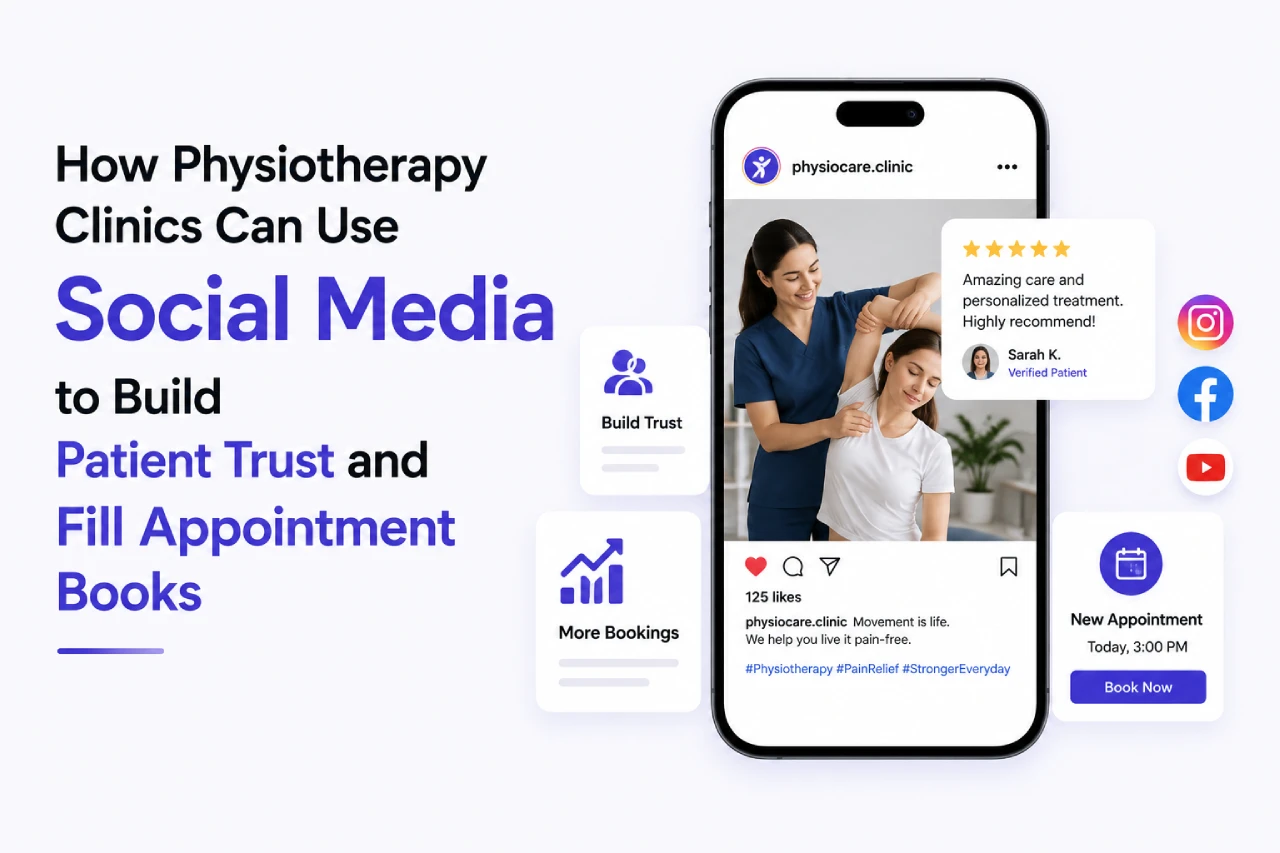
Most physiotherapy clinics land in one of two camps on social media. Either the clinic ignores the whole thing completely, or it runs an account in a way that never actually pays back the time going into it. A typical version of the second camp looks like this. A photo of an empty treatment room gets posted once a fortnight or so. Somebody adds a generic caption about back pain to it. It picks up a handful of likes from staff members and their partners, and the clinic quietly wonders why none of this is turning into actual appointments. The issue is honestly not that social media does not work for physio, because it absolutely does when done right. What causes the failure is that most clinics are running it the wrong way for the specific type of trust their particular service actually needs to build.
Physiotherapy sits in a genuinely interesting spot compared to most services. For most patients, booking a physio is a considered decision rather than an impulse one, because it usually means quietly acknowledging that something is properly wrong. Nervousness sits attached to that quite often, particularly for first-time patients, or for anybody dealing with pain that has been getting slowly worse for a stretch of months. Winning that patient over on social media is less about being noisy on the platform. It is more about becoming the clinic they already feel they half-know before they physically walk through the door for their first session.
What follows is a practical guide aimed at physio clinic owners across Belfast and further afield who want their social media actually pulling weight, instead of quietly sitting there as background noise nobody is reading. There is no jargon in here, and no made-up follower target numbers to chase. It just covers what genuinely moves the needle in this specific industry.
Why Physio Social Media Needs a Different Playbook
Marketing advice originally written for restaurants or beauty salons does not really translate cleanly across to physiotherapy, and following it too closely is why so many clinic accounts end up feeling oddly off-brand for the service. Think about what each of these industries is actually selling. A restaurant is selling an experience worth photographing to your friends afterwards. A beauty clinic sells a transformation people actively want to broadcast. Physio, on the other hand, is selling something patients would frankly rather nobody knew they were even dealing with. That fundamental difference in the emotional posture reshapes what content genuinely works on the physio side.
The Trust Barrier Is Higher Than in Most Industries
Patients booking a physio are essentially letting the clinician put hands on them physically. They are also inviting personal questions about their body during the session, and taking guidance that will end up shaping how they move for weeks or months afterwards. None of that level of trust arrives out of a slick before-and-after photo posted online. It arrives from patients feeling as if they already know the clinician a little bit before the first session even starts. Social media happens to be one of the very few places that pre-existing sense of familiarity can genuinely get built up.
Nervousness Sits Behind Most First Bookings
First-time physio patients tend to carry a few quiet worries into the booking decision itself. One of them is often whether the session is actually going to hurt them. Another is whether the clinician will silently judge them for how out of shape they have let themselves become, or whether the outcome will be being told to stop the thing they most love doing. Content that quietly acknowledges these kinds of unspoken concerns tends to convert much better than content selling the clinic itself, because it meets patients exactly at the point where their real hesitation is sitting.
The Content Types That Genuinely Work for Physio Clinics
Some content formats punch above their weight in physiotherapy specifically. Others sound sensible in theory but rarely produce actual appointments. The list below covers what genuinely works, based on what we have watched perform for physio clients across the years.
Short-Form Educational Video
Sixty-second videos of a clinician explaining something specific tend to be the single most reliable performer for physio accounts. What that content looks like varies a fair bit. Sometimes it is a quick explanation covering what actually causes tension headaches. Other times it might be a demonstration of one particular stretch for lower back pain, or a short piece on why runners keep pulling the same shin injury back after being treated for it. This shape of content works because it delivers something genuinely useful to the viewer, and simultaneously showcases the expertise of whoever is delivering it, which is exactly what a nervous first-time patient is unconsciously checking for when they land on your account.
Patient Progress Stories, Told Properly
A properly told patient story is one of the most persuasive pieces of content a physio clinic can produce. Not the flat before-and-after image. The actual story. Somebody walking in barely able to stand after a car accident, then twelve weeks later completing their first parkrun. Consent matters, of course, and the patient needs to have chosen to share their story rather than being asked to. When both those conditions are met, this format converts extraordinarily well.
Handling Consent Without Killing the Story
Some clinicians worry that going through any formal written consent process will make patients feel uncomfortable and end up killing the stories completely. What actually happens in practice is honestly close to the opposite. Patients who feel proud of their progress tend to love being asked to share their journey publicly, provided the clinic frames the request as celebrating what they achieved rather than treating them as marketing material. It only really needs a short conversation up front, followed by a clear written form to sign, and the patient then gets to review whatever will be posted before it goes live anywhere.
Behind-The-Scenes Team Content
Videos of the actual clinicians going about their work quietly do more trust-building than any polished marketing content will ever manage. What that looks like practically is footage of the team while they are actually working with patients, or chatting between sessions, or answering the question of what got them into physiotherapy in the first place. People end up booking physios they already feel they know a bit, and there is honestly no shortcut around that familiarity beyond letting patients see the actual humans behind the practice.
Myth-Busting and Common Misconception Posts
Physiotherapy is genuinely surrounded by outdated advice that patients still hold onto and repeat back to their clinicians in first appointments. The idea that rest is the best treatment for back pain still gets repeated everywhere. So does the belief that a joint popping means arthritis is developing, or that cracking your knuckles is going to cause damage over time. Content that respectfully corrects these misconceptions positions your clinic as a knowledgeable authority in the space, while giving something useful to the viewer at the same time. Both of those effects compound quietly over time.
Content Types That Waste Physio Marketing Effort
There are also formats that clinic owners often assume will work and then quietly do not. Worth being honest about these so you can stop putting hours into them.
Generic Fitness Motivation Posts
Motivational quotes over stock gym photography do essentially nothing for a physio clinic. Patients are not booking physiotherapy because they need motivating. They are booking because something hurts. Content pretending otherwise misses the actual concern by a wide margin.
Overly Clinical Language Nobody Understands
Posts full of terms like patellofemoral pain syndrome, or lumbar radiculopathy, without any translation of what either term actually means in plain English, tend to make a clinic look impressive to other clinicians in the field and roughly nobody else outside of it. Actual patients need actual language. They want to understand what is happening inside their body, alongside what your clinic is going to be able to do to help them fix it.
The Consistency Problem That Kills Most Physio Accounts
Almost every clinic account we audit was originally set up with a burst of genuine enthusiasm at the start. Content got posted intensively across the first two or three months. Then the account went quiet for six months or so, before another short burst of activity showed up somewhere further down the line. This particular pattern is actively damaging to patient trust, because a dormant account quietly signals to any prospective patient that the clinic behind it might not even still be operating properly. Would-be patients drift off silently to a competitor whose social looks alive.
The Realistic Posting Cadence Behind Trusted Clinic Accounts
Three to four posts per week across your primary platform is honestly enough to steadily build both visibility and patient trust as time passes. What genuinely matters more than the specific frequency is that the posting keeps happening month after month, without long unexplained silences appearing between bursts. A clinic that manages to stay consistent at three weekly posts across an entire year ends up in a very different place than one that started strong with daily posts for eight weeks before disappearing entirely.
Why Batching Solves This
Trying to think up and film content daily is genuinely unsustainable for a busy clinic. Batching solves it. One focused morning per month, spent filming and photographing enough material for the next four to six weeks, transforms the whole exercise from a daily stressor into a monthly appointment. Most clinics that stay consistent long-term are running some version of this batch approach.
Turning Followers Into Actual Appointments
Visibility on its own does not fill an appointment book. The bit that actually converts is the connection between somebody watching your content and them booking a first session, and that connection needs building deliberately rather than hoping it happens by accident.
Every post should quietly answer one question in the viewer’s mind, which is what they should do next if what you just said resonated. Sometimes that means a soft call to book. Sometimes it means offering a free downloadable guide in exchange for an email address that leads to a booking later. Sometimes it just means having the booking link visibly available in the profile bio, so that anybody moved by a post has somewhere obvious to go. Whatever the path is, it needs to be there, and it needs to feel warm rather than salesy.
How Creative Sweet Helps Physiotherapy Clinics With Social Media
We handle social media and content creation for physiotherapy clinics across Belfast and Northern Ireland, and the work looks a bit different from generic agency social media. Every clinic gets a proper strategy built around its specific patients and specialties first. From there we handle the content production, the posting schedules, and the ongoing tweaks based on what is actually landing with the audience over time.
Our approach with physio clients specifically leans quite heavily on featuring the actual clinicians themselves. Patients genuinely want to know the person who is going to be treating them. No amount of polished graphic design work is going to substitute for that specific human connection coming through in the content itself. So the content plan we end up building for every clinic includes real filmed footage of your team, translated across into a format that reliably converts casual followers into actual first appointments.
If your physio clinic is quietly underperforming on social media, or you have never really committed to it properly and want to change that, the conversation is worth having. Get in touch at creativesweet.net or book a free discovery call. We will take an honest look at where your current social sits and give you a straight answer on what would move the needle for your clinic.
Frequently Asked Questions About Physiotherapy Social Media
What social media platforms work best for physiotherapy clinics?
Instagram tends to be the single strongest performer for most physio clinics, with Facebook sitting close behind it. Both platforms happen to support the specific mix of content that healthcare marketing actually depends on. That mix includes educational video, patient result content, and community storytelling. TikTok is worth considering for any clinic explicitly targeting a younger patient demographic, and LinkedIn suits clinics that also serve corporate accounts on the injury prevention side of their work.
How often should a physiotherapy clinic post on social media?
A physio clinic wants to be aiming for somewhere in the three-to-four-posts-per-week range on its primary platform. In this industry, consistency really does matter more than sheer frequency. A clinic that posts three genuinely useful pieces every week for six months straight builds meaningfully more patient trust than one that posts daily for eight weeks and then goes silent afterwards.
Is it worth showing patient results on physio social media?
Yes, provided the patient has given proper written consent up front and their identity is protected wherever they would prefer it to be. Genuine progress stories are among the most powerful trust signals a physio clinic can put out into the world, since they show real outcomes with real patients rather than promising results in the abstract with generic marketing language.
Should physiotherapists appear on camera themselves?
Absolutely they should. Patients honestly want to know who will be treating them before committing to a first appointment. Physios who show up on camera regularly end up consistently outperforming clinics leaning entirely on stock imagery, alongside clinics leaning purely on graphic design. The reason for the gap is that the human connection built through video meaningfully lowers the barrier for a nervous first-time patient to actually go ahead and book.
Can Creative Sweet manage social media for my physio clinic?
Yes. Creative Sweet handles social media alongside content creation for physiotherapy clinics right across Belfast and Northern Ireland. The work spans strategy development at the start, ongoing content production once things are live, and running the day-to-day posting schedules on whichever platforms your clinic is currently prioritising. Get in touch at creativesweet.net to discuss what your clinic needs right now.


Keep reading

- SEO
Somebody in Belfast wakes up on a Tuesday morning with lower back pain that has...

- WordPress
This post is general educational guidance for SME website owners and does not constitute legal...

- Business, SEO
Your Google Business Profile is honestly the highest-leverage marketing asset most SMEs already own, and...