
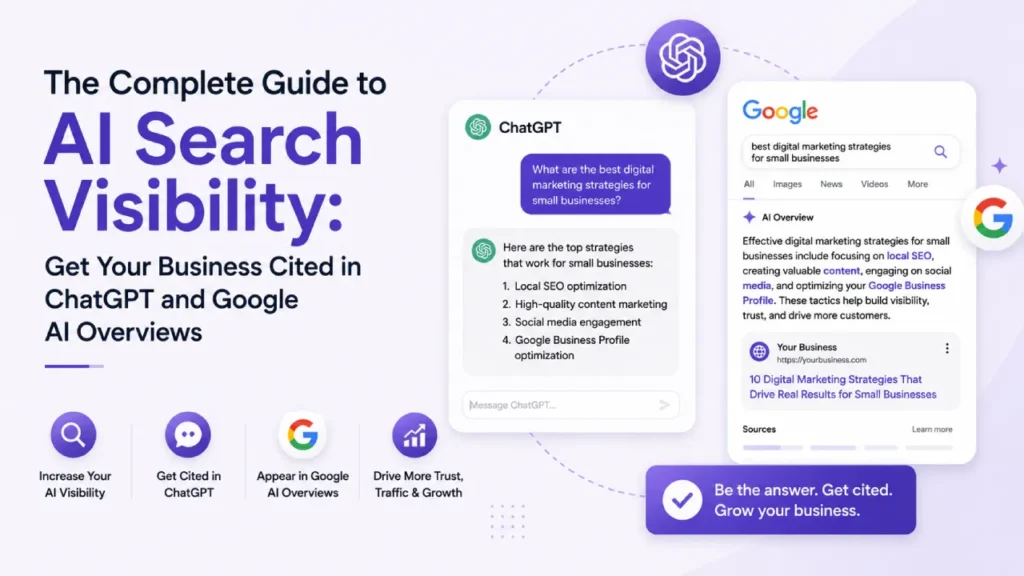
Something quietly enormous has happened to search over the last two years. The way people find businesses has genuinely started shifting away from the traditional blue links, and the pace of that shift has hit the point where ignoring it looks less like an oversight and more like a conscious call. Take somebody hunting down a plumber for a burst pipe. They are now just as likely to ask ChatGPT for a recommendation as they are to open Google. The same is true of the person looking for a marketing consultancy, or an accountant to sort out a mess of receipts. When the AI answers back, it does so by naming a small handful of specific businesses inside its reply. Everybody else on that topic, for that user, effectively does not exist.
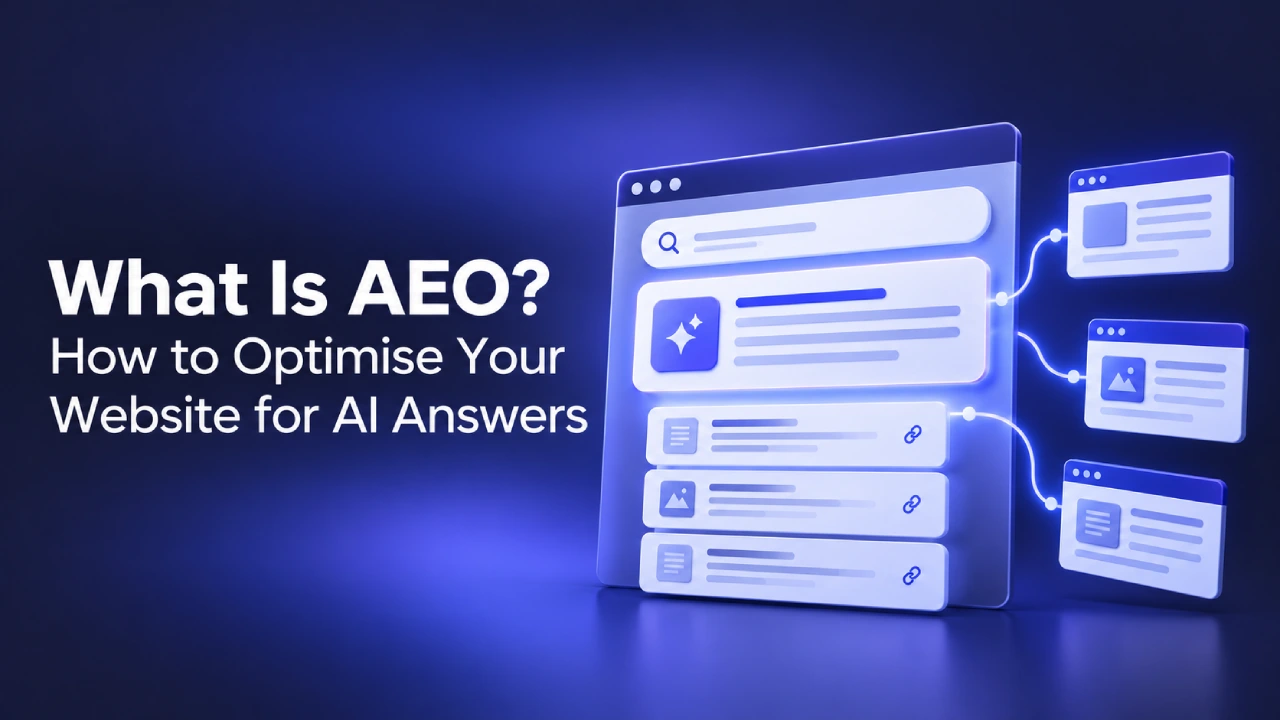
The whole shift has created a new sort of visibility problem that traditional SEO does not fully solve on its own. Ranking on page one of Google is still valuable of course, but it has stopped being the only thing worth chasing. Getting cited inside AI-generated answers is fast turning into its own discipline. There are signals unique to it, levers unique to it, and a competitive dynamic that behaves differently from ordinary organic search. The practice has picked up a couple of names as people have started building around it. GEO, standing for Generative Engine Optimisation, has become the most common label, while some practitioners prefer AEO for Answer Engine Optimisation. The label matters far less than the underlying reality, which is a real and growing layer of visibility that most UK businesses are quietly ignoring right now.
What follows is the working playbook for getting your business cited inside AI search. Not theoretical predictions about where AI is heading. The practical work that gets a UK SME mentioned inside ChatGPT, Perplexity, Claude, and Google AI Overviews right now in 2026.
Why AI Search Visibility Has Become Its Own Discipline
For twenty years, the goal of search visibility stayed reasonably consistent. Rank high on Google. Capture the click when it came. Convert that visitor when they landed on the site. AI search fundamentally breaks that model, because more often than not, there is no click involved anymore. The user asks their question. Back comes a summarised answer with a few sources named inside it. From there they either act on the answer straightaway, or they move on with whatever information they have. The whole customer journey, in a growing number of cases, now begins and ends inside the AI tool itself.
The Zero-Click Reality of AI Search
Google AI Overviews now show up on roughly a third of searches across the UK, and that figure keeps ticking upward with every quarter. Picture somebody searching “best accountants for freelancers in Manchester” and getting a direct answer at the top of the page naming three firms. The whole traffic dynamic changes entirely at that point. Whichever three firms were mentioned take home the awareness, while every other accountant on the page below quietly becomes background noise the user may well never even scroll to see. Landing a citation inside the answer has genuinely become more valuable than ranking fourth or fifth in the traditional blue-link results underneath it.
Why Being Cited Matters More Than Being Ranked
When ChatGPT recommends a business by name, there is an implicit endorsement wrapped up in that recommendation that no organic ranking has ever really carried. The AI is telling the user, in effect, that this specific business is worth their attention. That framing changes user behaviour. People act on those AI-generated recommendations with noticeably less friction, and honestly a bit less second-guessing too, than they would if they were self-serving through a page of search results. Traffic volumes from AI citation are still smaller than traditional Google traffic across most sectors right now, sure, but the conversion quality from those citations tends to come in noticeably higher in return.
How AI Search Engines Actually Choose Who to Cite
There is a genuine mystique around AI search that leads some people to assume the citation process is inscrutable. It is not. AI systems are trained on the same web that traditional search engines index, and they use recognisable signals to decide who gets mentioned inside an answer. Understanding those signals is the whole foundation of GEO work.
Signal One: Structured, Authoritative Content
AI models genuinely favour content that is clearly structured underneath, that reads as authoritative on its subject, and that directly answers the sort of questions real users type into the tools. A page laid out as clean questions and answers, with proper heading hierarchy underneath and specific factual detail throughout, tends to get referenced far more often than a rambling marketing page dancing around the actual topic. Content originally written for AI citation reads a shade differently from content written purely for a human audience. It is more direct in how it says things. It gets a lot more specific. And it is willing to hand over a definitive answer instead of endlessly hedging the way marketing copy so often does.
Signal Two: Consistent Mentions Across Trusted Sources
AI systems triangulate. A single glowing mention of your business on your own website does very little on its own, but being referenced across multiple credible sources out on the wider web starts doing considerably more. The kind of places that count are things like industry publications writing about your sector, professional directories listing accredited providers, reputable review sites, and any local or trade press covering the space you work in. The pattern of those mentions is where the real weight sits, more than the raw total volume. A business referenced in five separate trustworthy places will typically outrank one referenced fifty times inside its own domain.
Signal Three: Schema and Structured Data
Structured data is genuinely how you feed information to AI systems in a format they cannot easily misread. Different schema types serve different situations. Local businesses tend to run LocalBusiness schema across their site. Larger operations often use Organization schema instead, while ecommerce brands lean on Product schema for their catalogue, and any question-based content deserves FAQPage schema wrapped around it. Between them these formats help the AI models parse exactly who you are and what you do without having to guess from prose alone. The businesses actually getting cited in AI answers today are, almost universally, the ones running proper structured data across their sites.
Why FAQ Content Punches Above Its Weight for AI Citation
FAQ-formatted content is disproportionately valuable for AI visibility, and the reason is simple. When somebody types a specific question into ChatGPT, the AI is out hunting for content that answers exactly that kind of specific question. A properly written FAQ block sitting on your website with FAQPage schema wrapped around it is essentially served up on a plate for the AI to quote from. Publishing genuine FAQ content built around the actual questions your customers ask you is one of the highest-return single moves for GEO work in 2026.
The GEO Playbook: What UK Businesses Should Actually Do
Enough theory. Here is the practical work that moves the needle on AI search visibility for a UK SME in 2026. The moves overlap significantly with proper SEO, which is genuinely good news, because businesses already doing SEO well have a head start.
1. Publish Content That Answers Real Questions Directly
The single highest-leverage GEO move is publishing content built specifically around the questions your customers ask. Not blog posts about industry trends. Actual questions, phrased the way real people phrase them, answered directly in the first paragraph and then expanded on afterwards. An accountant should have a page directly answering “how much should a small UK business pay for accountancy services”. A physiotherapist should have one answering “how many sessions does it take to fix sciatica”. AI systems pull from pages that answer specific questions cleanly, and most business websites are still missing this content entirely.
2. Implement Structured Data Across the Site
Schema markup has quietly shifted from being a nice-to-have to being a practical requirement for AI visibility. What that looks like in implementation depends on the business, though the essentials are consistent enough. Organization schema needs running across the whole site as a baseline. Any business with a physical location should be layering LocalBusiness schema on top. Question-based pages want FAQPage schema wrapped around them, blog content benefits from Article schema, and anyone selling online should have Product schema across the catalogue. Getting all of this right takes a proper technical implementation pass, but it is essentially a one-time job with benefits that compound for years afterwards.
3. Build Authoritative Mentions Off-Site
Citations from credible external sources are heavier signals than ever for AI systems. That means investing in the kind of PR work that lands genuine mentions in industry publications, on partner websites, in professional directories, and inside guest content on authoritative sites. Cheap link-building tactics that worked briefly in 2020 do very little here, because AI systems are quite good at distinguishing real editorial mentions from artificial ones.
4. Get Your Business Wikipedia-Adjacent
AI models lean heavily on Wikipedia and similar reference-quality sources. Most SMEs will realistically never merit their own Wikipedia page, and honestly that is fine. The thing that actually matters is getting your business mentioned in Wikipedia-style contexts wherever the opportunity exists. Industry association member listings do this well. Professional body directories play a similar role, as do reputable trade publications. All of them serve the underlying function of establishing your business as a genuine, credible entity operating in your sector.
5. Monitor Your AI Search Presence Actively
The old rule about not being able to improve what you do not measure applies just as cleanly to AI search. Getting into the habit of regularly asking the different AI tools for recommendations in your category is the cheapest, fastest way to see where you actually stand today. Try it inside ChatGPT one week, run the same queries through Perplexity, then Claude, and then check what shows up in Google AI Overviews. Track which businesses are getting cited instead of you. Look properly at what those competitors are doing differently. Adjust your approach based on what you actually find. This is genuinely new competitive territory, and the businesses treating AI visibility as a serious ongoing practice, rather than a passing curiosity, are the ones quietly pulling ahead of everyone else.
How Creative Sweet Helps UK Businesses Win at AI Search
We work with businesses across the UK and Ireland on integrated SEO and AI search optimisation, because the two disciplines increasingly overlap and separating them means doing worse at both. A business investing in traditional SEO without any GEO awareness is quietly missing a growing share of relevant search traffic. A business chasing AI citations without proper SEO foundations underneath is building on sand.
Our approach kicks off with an honest audit of where your business currently sits across both worlds. Practically that involves a few different bits of work. We check your presence inside the actual AI tools by running queries the way real users would. We review the structured data across your site to see what is missing or wrong. We take a proper look at how your existing content has been written from an AI-consumption angle, and we assess the external authority signals sitting around your brand right now. Out of that comes a practical ninety-day plan that goes after the biggest gaps first, instead of trying to fix every possible issue at the same time.
If your business has been quietly missing from AI-generated answers across your space, the moment to act on it is honestly right now. This window of competitive advantage is not going to sit open indefinitely. The businesses that will be routinely cited by AI tools in 2027 are the ones putting in the foundational work through 2026. Get in touch at creativesweet.net or book in a free discovery call. We will walk through where your business currently sits, and lay out what a realistic path to being cited looks like from where you are today.
Frequently Asked Questions About AI Search Visibility
What is AI search visibility?
AI search visibility is essentially how often your business gets cited or recommended inside answers that AI tools generate for their users. It covers mentions inside ChatGPT and Perplexity, along with Claude, and increasingly the Google AI Overviews appearing on ordinary searches too. What was once a single visibility layer around traditional search rankings has become two overlapping layers, and the newer AI-driven one needs its own optimisation approach. That approach is sometimes called GEO, and sometimes AEO.
What is GEO optimisation?
GEO stands for Generative Engine Optimisation. It is the practice of getting a business website and its wider online presence into a shape where AI-powered search engines will actually cite the business when their users ask relevant questions. GEO overlaps significantly with traditional SEO in what it does, but the emphasis is different. Structured content matters more. Authoritative external mentions carry more weight. And clear expertise signals need to come through in the writing itself, rather than being implied around it.
How is AI search different from Google search?
The traditional Google search returns a page of blue links for the user to sift through and pick from. AI search does something quite different. It generates a direct answer to the question, and inside that answer it often cites a small handful of specific businesses or sources by name. Being one of those cited sources is a genuinely different kind of visibility challenge from ranking on page one of the classic blue links, and it needs a distinctly different approach from an ordinary SEO campaign.
Should UK businesses invest in AI search optimisation now?
Yes, quite genuinely. AI search usage among UK consumers is climbing at a pace that makes early investment genuinely worthwhile. Any business starting GEO work in 2026 is putting authority signals in place that will compound over time as more users shift towards AI-powered discovery over the next couple of years. Waiting until that shift is fully complete before starting the work leaves you competing from behind, and that is a considerably harder position to work from than the one available today.
Can Creative Sweet help my business get cited by AI?
Yes. Creative Sweet works with UK and Ireland businesses on integrated SEO and AI search optimisation, helping brands become more discoverable inside ChatGPT, Perplexity, Claude, and Google AI Overviews. Get in touch at creativesweet.net to discuss what your business currently needs to start being cited by AI search tools in your sector.